Q&A
Could you start by introducing yourself - who you are and what you do?
My name is Lotte Ottevanger, I’m a multi-disciplinary artist, art teacher and recently became the new Night Mayor of The Hague. With my art I focus on socially critical topics, with the purpose of highlighting underexposed stories. The outcome is often installation based and to be experienced. I’m very happy to be able to take on the role of Night Mayor, which is the spokesperson of night culture and I aim to improve safety, inclusion and diversity.
Coming from The Hague, what do you feel your background adds to ADE?
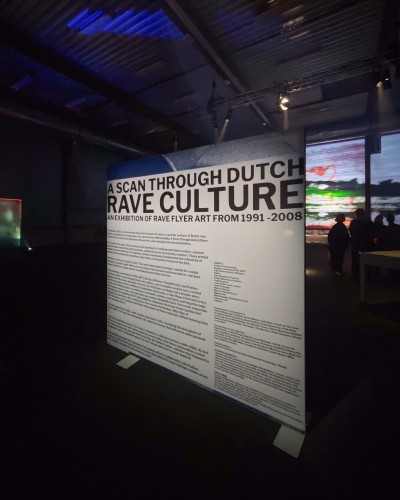
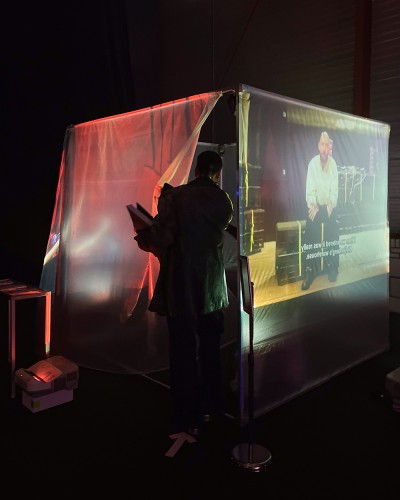
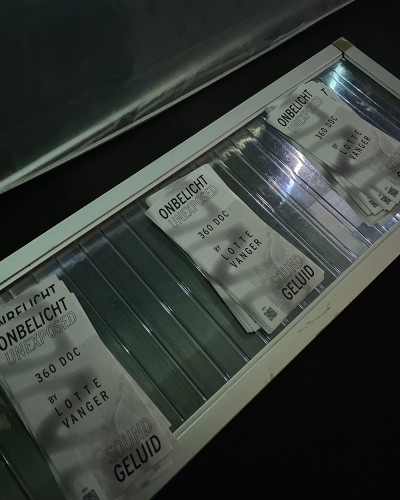
So I was part of ADE this year having two different roles, as an artist/researcher and as the Night Mayor of The Hague. In 2023 I did a research for the National Archive into The Hague’s underground night culture which resulted in a 360 documentary experience. I had filmed with a 360 camera in nightclubs and project this around you combined with interviews with tho’s who create nightlife. This installation was part of the ADE exhibition from VibeLab at DOOR open SPACE. I Think it’s very important night culture outside of Amsterdam is shown as well, it creates a broader perspective on Dutch night culture and the differences between cities. Especially at an international event like ADE.
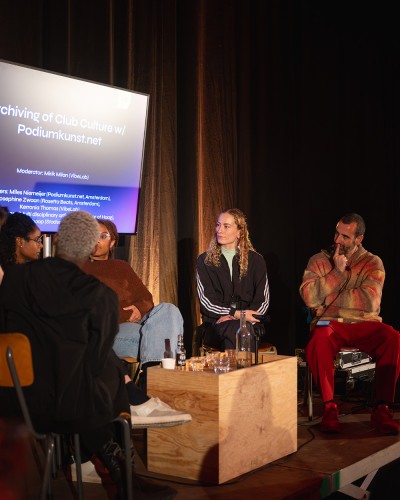
Based on the research I did and my role as Night Mayor I was invited to be part of a panel about archiving club culture that was moderated by the previous Night Mayor of Amsterdam, Mirik Milan. This was a very interesting conversation and I think for me it was really nice to add both my past knowledge of the research and history of night culture and the future possibilities and visions I have for nightlife.
Is there a distinctive way of thinking or approaching your work that you bring from The Hague’s creative scene?
I would say so! For me The Hague has a very unique night culture because of all the contradictions of The Hague’s society. On one side it’s a governmental city with the international criminal court and on the other side there is a lot of counter culture that doesn’t always fit in the same mould. For a long time the municipality did not see nightlife as culture. Most parties or clubs are here despite of the municipality, night culture really had to fight for recognition. That’s why I think there is a really DIY approach to creating art and music in The Hague, with a lot of room for experiment. Something that really draws me to it and also how I approach my own work.
How did your participation at ADE come about - were you invited, or did you actively pursue it?
I was invited by VibeLab, which is a research consultancy and advocacy agency dedicated to supporting creatives and preserving nighttime culture.
What excites you most about being part of ADE - the scale, the connections, or the contribution itself?
The contribution itself excites me the most, I think it’s really nice to see so much disciplines besides music being part of ADE. This is what nightlife is about, creating things together connected by the same love for music and club-culture.
Since ADE started in 1996 to strengthen the Dutch electronic music industry, how do you see it evolving today? How does this year’s ADE compare to your previous experiences?
At the previous editions of ADE I was there as a visitor. So those experiences where very different then being part of it. But I think ADE is a good example of how club-culture has changed over the years. From being very underground to becoming socially accepted or even mainstream. Also dutch municipalities have very different views on nightlife these days, which creates a lot more space to evolve.